Sakura and Mt. Fuji Together: the 2027 Cherry Blossom Pre-Wedding Guide
The short answer
Tokyo’s forecast is the wrong forecast to plan around.
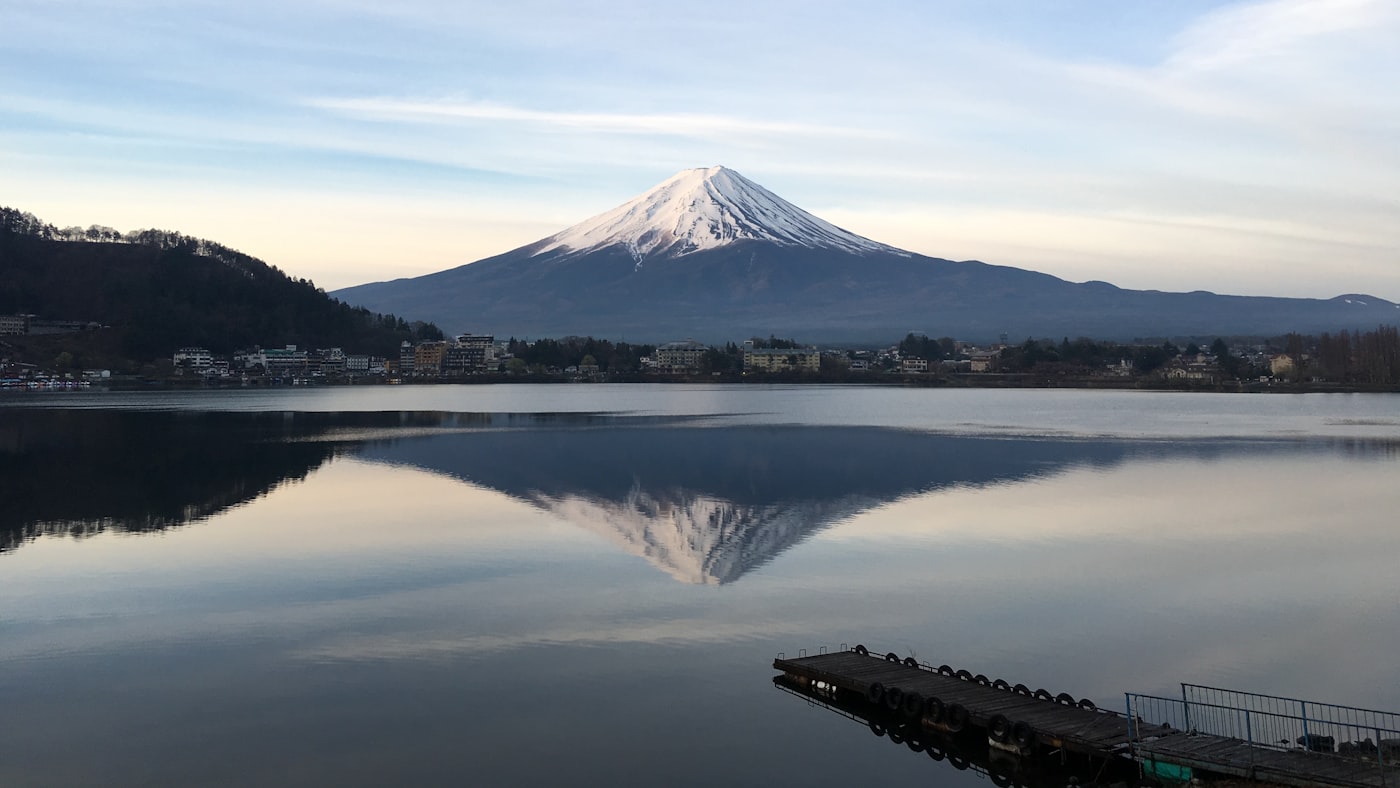
Almost every couple planning a sakura shoot books their flights against the Tokyo bloom forecast. Lake Kawaguchi, at the foot of Mt. Fuji, sits about 830 metres above sea level, and its cherry trees open roughly one to one and a half weeks after the capital’s. That gap is the single most useful fact on this page. It means a trip that arrives “too late” for Tokyo can still be exactly on time for the one photograph you cannot take anywhere else on earth — cherry blossom and Mt. Fuji in the same frame.
Bloom outlook — updated 17 September 2026
Where the 2027 forecast stands
Japan’s forecasters publish their first cherry blossom forecasts for the coming spring in January, so there is no official 2027 forecast yet. Until it appears, plan around the recorded pattern in the table below: Tokyo has reached full bloom between 22 March and 4 April in each of the last eleven years, Kyoto a few days later, and Lake Kawaguchi roughly one to one and a half weeks after Tokyo. We update this note every month.
Cherry blossom is everywhere. Cherry blossom with Mt. Fuji behind it is not.
This is worth saying plainly, because it changes what you should optimise for. Beautiful cherry blossom exists in Korea, in Taiwan, in Washington DC, in half a dozen cities that will be in bloom the same fortnight you are travelling. If blossom alone is the goal, Japan is one option among many.
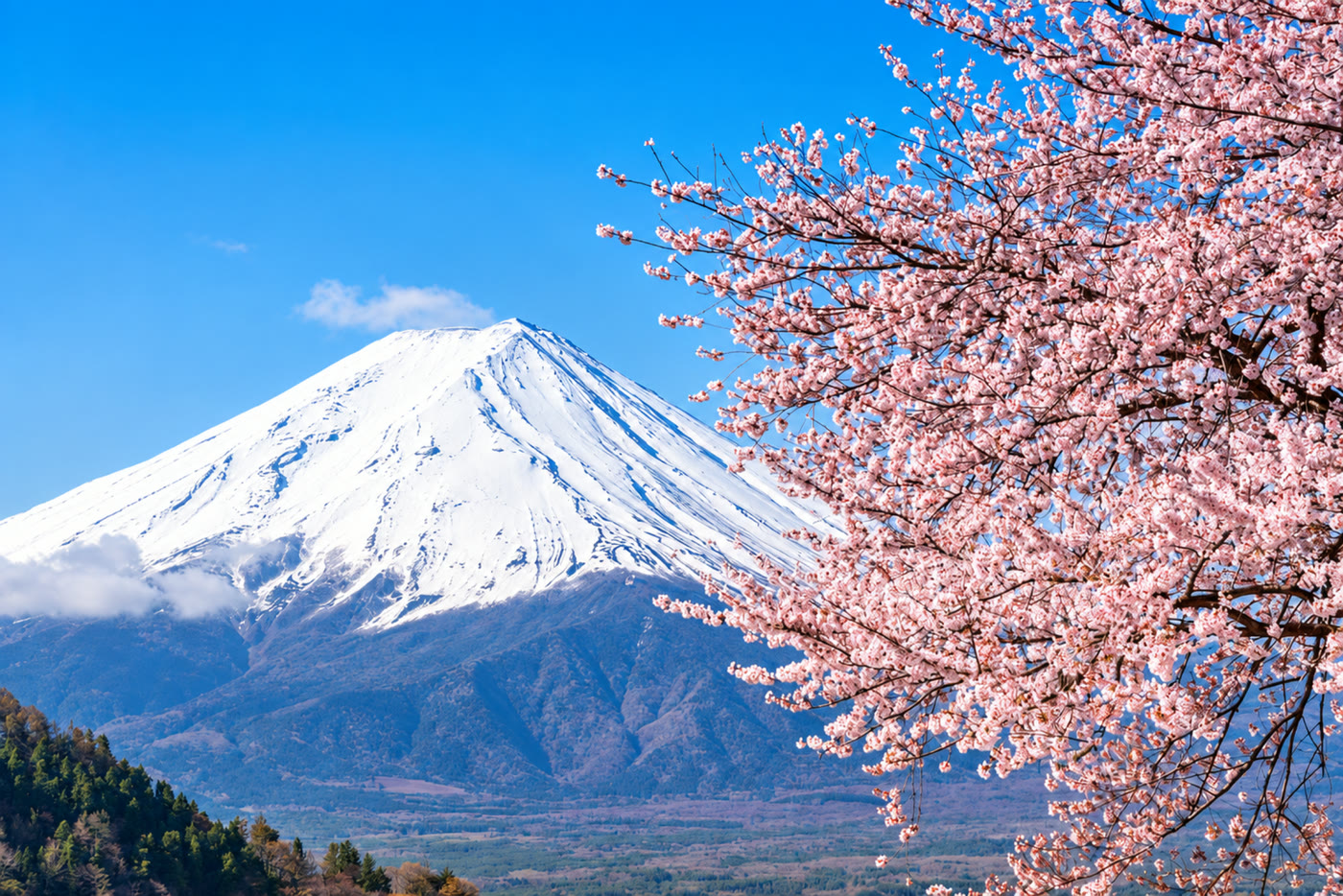
Mt. Fuji is not. There is exactly one of it, and there is a narrow window each spring when it still carries snow while the trees below it are open. That combination — white summit, pink canopy, blue sky — is the frame that has no substitute, and it is the reason we would steer a spring shoot towards the Fuji area rather than towards a famous Tokyo park.
Two weeks of difference, and why it works in your favour
Tokyo’s cherry trees reach full bloom somewhere in the last days of March or the first days of April. Lake Kawaguchi, higher and colder, follows about seven to ten days later; local guidance puts its peak in early-to-mid April, and the Fuji-Kawaguchiko cherry blossom festival is normally held from the end of March into the middle of April. The north shore of the lake carries roughly two hundred Somei Yoshino along about a kilometre of path, with the lake in front and the mountain behind.
Read that as a planning tool rather than trivia. If your travel dates fall late and Tokyo has already gone green, the Fuji area may still be at its best. If your dates fall early and Tokyo is perfect, you have a choice of both. The altitude difference does not remove the uncertainty, but it widens the target you are aiming at.
The dates move more than most people expect
Below are Tokyo’s full-bloom dates for the last eleven years. The earliest and the latest are two weeks apart. This is why a studio that promises you blossom on a specific day in advance is promising something it does not control.
What follows from the spread is not despair, it is method. Hold more than one candidate date inside your trip, book the shoot before you lock the rest of the itinerary, and let the forecast decide the final day two or three weeks out. That is how we plan a spring shoot, and it is why we ask for your travel window rather than a single date when you first write to us.
Why a Fuji shoot starts at first light
The mountain keeps its own schedule, and it is worth knowing what that schedule looks like before you choose a start time. Fuji City has recorded for twenty-nine years how often Mt. Fuji could be seen at eight in the morning, counting a morning as visible when the mountain showed either in full or in part. December is the clearest month at 84%. July is the least clear at 23%. April, the month most couples travel for blossom, sits at 55%.
Two things follow from that curve, and both are practical rather than discouraging. The first is that the hour matters more than the date. The eight o’clock reading is the best of the three the city takes each day, because warmer air later in the morning tends to build cloud around the summit. Starting at first light is the single largest thing within our control, and it is why we ask you to be ready before breakfast rather than after it.
The second is that April is a trade you are making with your eyes open. If an unobstructed mountain matters more to you than blossom, December through February is the honest answer — our Mt. Fuji page covers the winter shoot. If the blossom is the point, April is when you come, and we build the morning around giving the mountain its best chance.
Where the photographs actually get taken
The Kawaguchiko area is not one viewpoint but several, and they fail in different weather, which is the point of having them.
The north shore of the lake. The classic frame: blossom in the foreground, still water, the mountain rising behind. About a kilometre of Somei Yoshino, and the reflection when the lake is calm early in the day.
The lakeside and the jetties. Quieter, lower, and more forgiving when the summit is hidden. Moored boats and wooden piers give a frame that does not depend on the mountain being out.
The parks and the open ground. Room to move, space for a gown, and grass instead of gravel. Useful when the shoreline paths are busy.
The woodland. Dappled light under trees, no horizon, no crowd. This is where a shoot goes when the weather has decided against you and you still want photographs you would hang on a wall.
The five-storey pagoda: the most famous frame in Japan, and 398 steps
Arakurayama Sengen Park, above the town of Fujiyoshida, holds the view that appears on more posters of Japan than any other: a vermilion five-storey pagoda, some six hundred and fifty cherry trees, and Mt. Fuji behind them. It is genuinely spectacular, and we will photograph there if you want it.
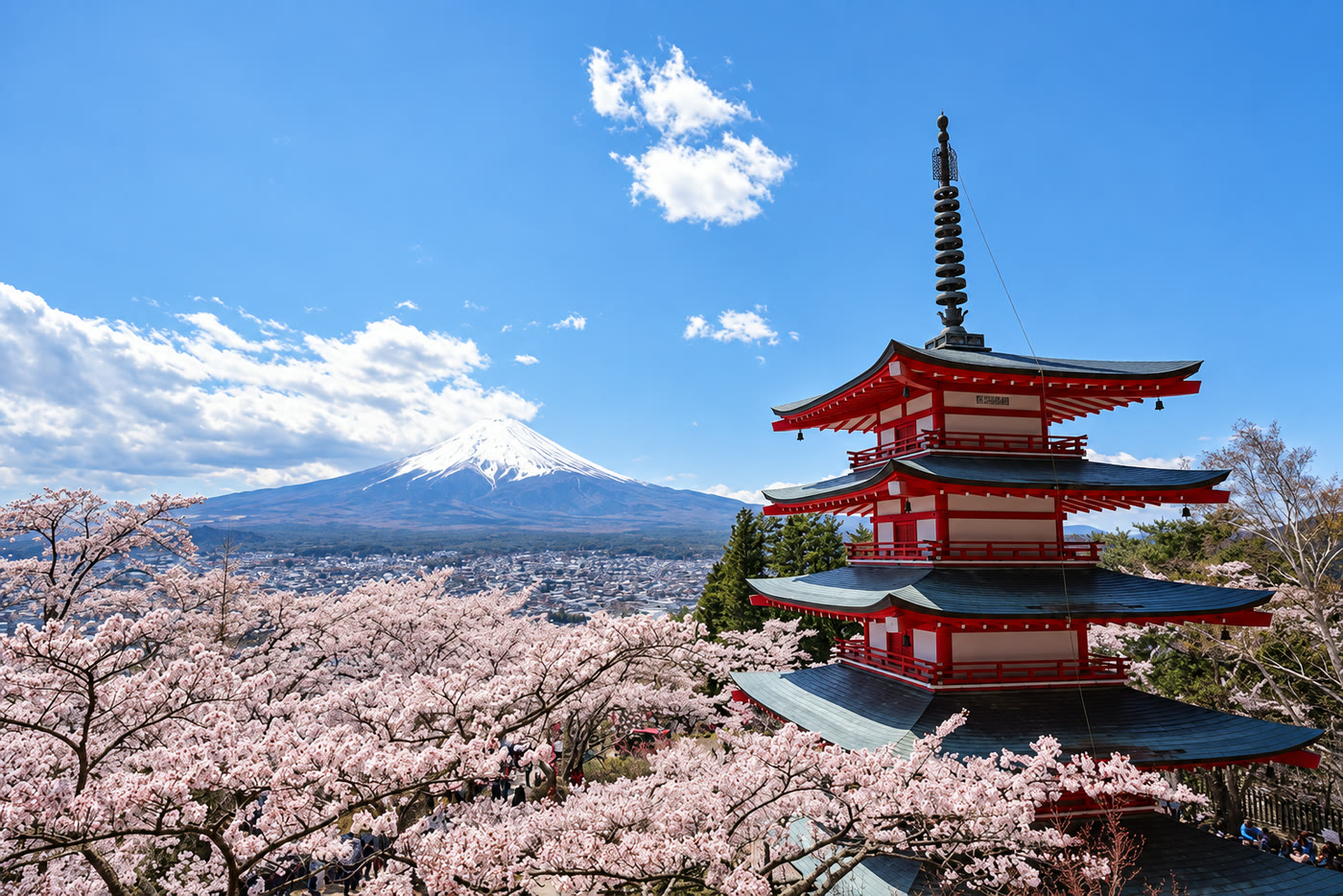
Here is the part the posters leave out. Reaching the pagoda from the shrine below means climbing the Sakuya-hime Steps — 398 of them, about two hundred metres of stairway, fifteen to twenty minutes at an unhurried pace. The steps are named after Konohanasakuya-hime, the blossom deity enshrined at the foot of the hill.
You would be climbing them in an iro-uchikake or a full gown. That is a real physical ask, and in early April it is done in cold air. It is also the busiest viewing deck in the region during blossom season, which means patience, and it means the frame will rarely be empty of other people.
We are not talking you out of it. We are telling you the cost before you agree to it, so that the answer is yours. Couples who want that specific photograph and know what the climb involves are usually glad they did it. Couples who wanted a relaxed morning by the water are usually glad they chose the lake instead.
If the blossom has already fallen
Some years it will have. The honest answer is that we do not pretend otherwise, and that the geography gives us somewhere to go.
The five lakes around Mt. Fuji sit at different heights, and their trees open days apart. When the lakeside at Kawaguchiko has turned to leaf, higher and cooler ground nearby can still be in flower. Moving the shoot to a different location on the day is possible, and we will discuss it with you rather than surprise you with it — it affects timings and travel, so it is a decision we make together once we can see what the season is doing.
And if the blossom has gone entirely, spring in the Fuji area is not a write-off. Fresh green on the slopes, a snow-capped summit, still water, woodland light: the mountain does not stop being the mountain. What changes is the colour of the foreground, not the quality of the day.
Why October and November decide who photographs you
This is the most practical paragraph on the page. Spring 2027 dates are normally taken during October and November 2026. Later than that, availability inside the blossom fortnight becomes genuinely difficult — not impossible, but difficult.
The reason is worth understanding, because it is not the reason couples usually assume. Booking sooner does not buy you a lower price; our figure in cherry blossom season is the same as in any other month, and we do not run seasonal rates in either direction. What it changes is who photographs you. The blossom window is about two weeks long and contains roughly four weekend days. The photographers, the hair and make-up artists and the kimono dressers who are good at this work are booked for those days first. Leave it until January and you may still find a slot; you are much less likely to find the person you would have chosen.
What to wear when the background is pale pink
Two directions work, and they work for opposite reasons.
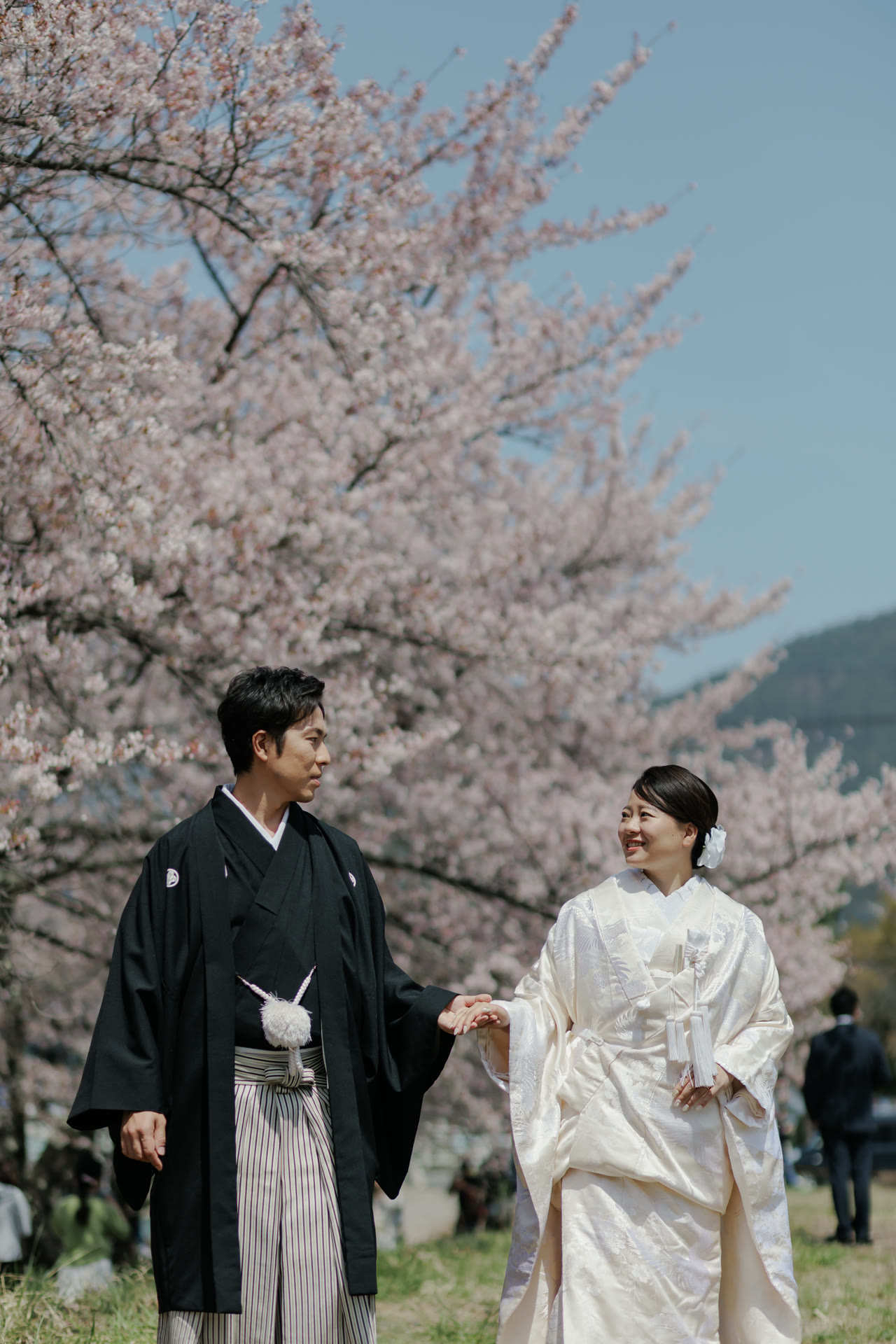
An iro-uchikake. The coloured bridal kimono — deep reds, golds, embroidered cranes and flowers — sits against pale blossom with real force. A white shiromuku can disappear into a canopy of white-pink flowers in flat light; a coloured uchikake never does. This is our first suggestion for a Fuji shoot in spring, and it is unmistakably Japanese in a frame that is already unmistakably Japanese.
A gown. The other direction: let the blossom be the colour and keep the figures clean and light. A long train against grass or a lakeside path photographs beautifully in spring light, and it moves more easily than kimono if the day involves walking.
On a full-day plan many couples do both, with a change between locations. Outfit rental, dressing, hair and make-up are inside the package price either way — the choice is aesthetic, not financial.
Two things overseas couples are rarely warned about
Pollen. Japan’s cedar and cypress pollen season runs through exactly the weeks the cherry trees are in flower, and it is more severe here than in most countries our couples travel from. Visitors who have never had hay fever in their lives sometimes react on their first Japanese spring. Streaming eyes are not what you want in the first hour of a shoot. If you are prone to allergies at all, bring antihistamines from home and take them the night before rather than on the morning.
The cold. Blossom season is not warm, and the Fuji area at 830 metres is colder than Tokyo, often by several degrees, in the early morning when the light is best and the mountain is clearest. A gown outdoors at seven in the morning in early April is a different experience from the one the photographs suggest. We plan for it — coats between frames, sheltered spots, an order of shots that does not leave you standing still — but it is worth knowing before you choose your outfit.
Getting there is easier than it looks
Kawaguchiko reads as remote on a map and is not. The Fuji Excursion limited express runs direct from Shinjuku to Kawaguchiko without a change, in about one hour and fifty minutes at its fastest. Many couples travel out the afternoon before, stay locally, and start the shoot at first light rather than attempting the journey and the morning in one go. Given how much the early hours matter for the mountain, we usually suggest the same.
Planning a sakura shoot for 2027
Send us the window you will be in Japan rather than a single date. We will tell you which days inside it fall most plausibly within the bloom, what the mountain is likely to be doing, which of the locations above suits the outfit you have in mind, and what the total would be. Our price does not change for the season: ¥260,000 for the photography, ¥380,000 with the film, ¥500,000 for a full day, tax included, and the Mt. Fuji area costs the same as Tokyo, Kyoto and Okinawa.
The Sakura 2027 page has the package details, and our Mt. Fuji viewpoints guide covers the area outside blossom season. If you are still choosing between locations, our comparison of all four puts the seasonal figures side by side.